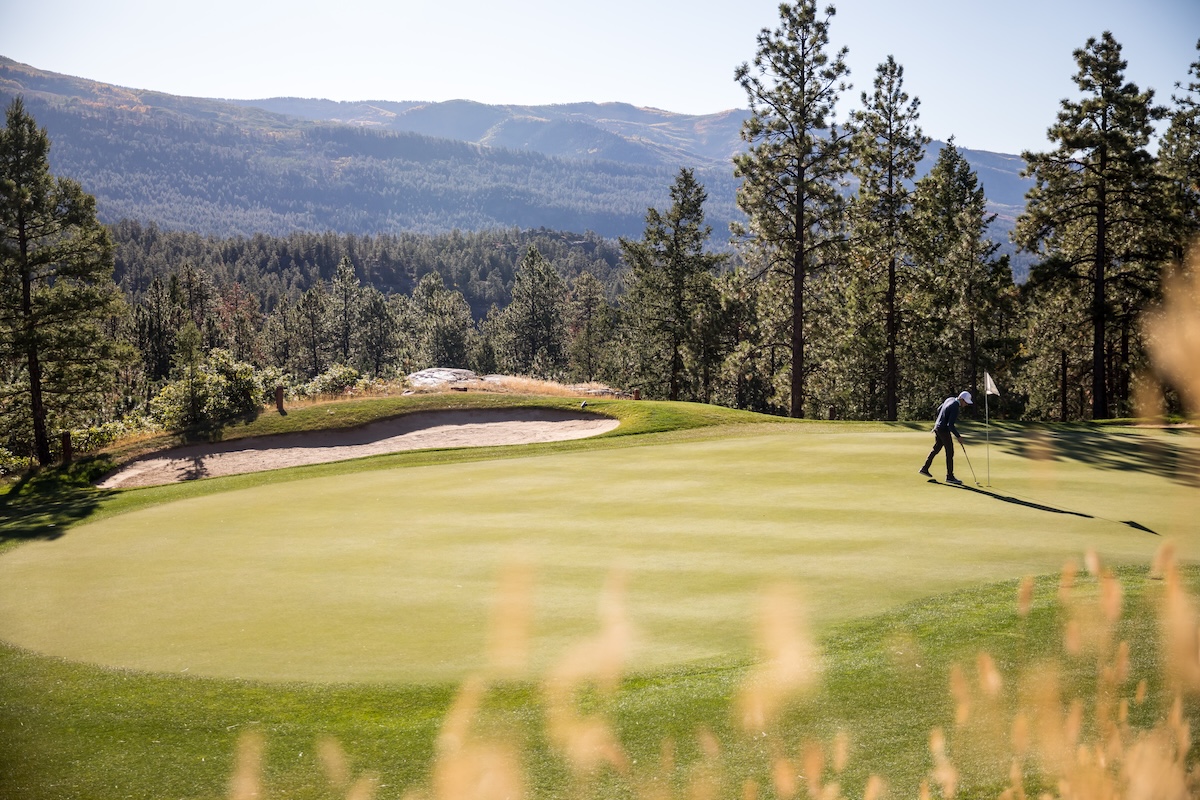
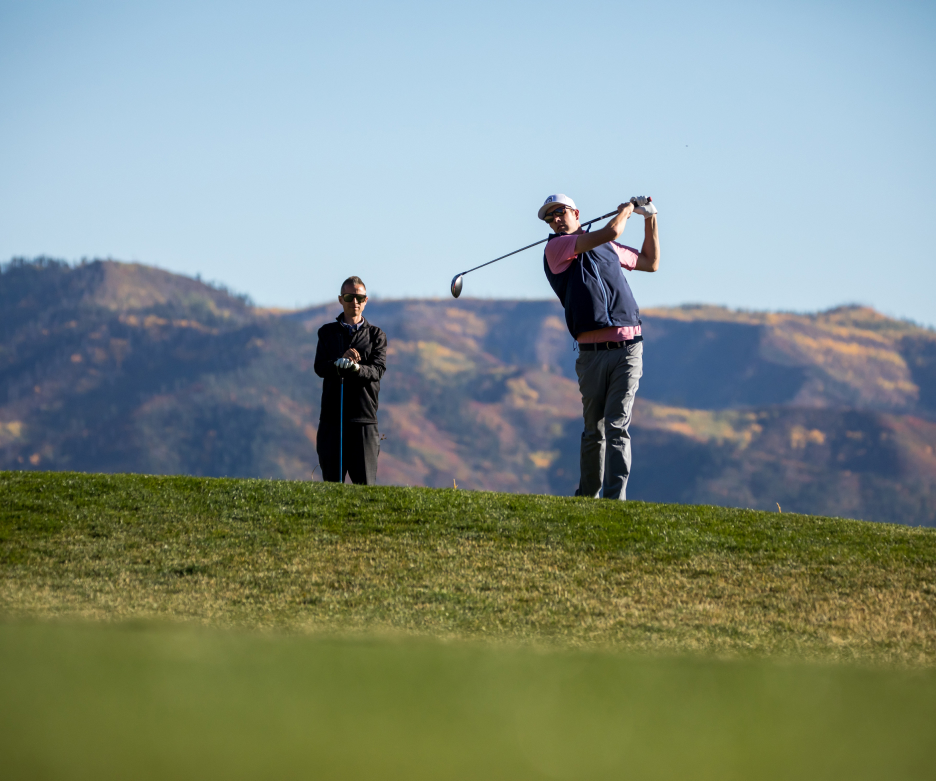
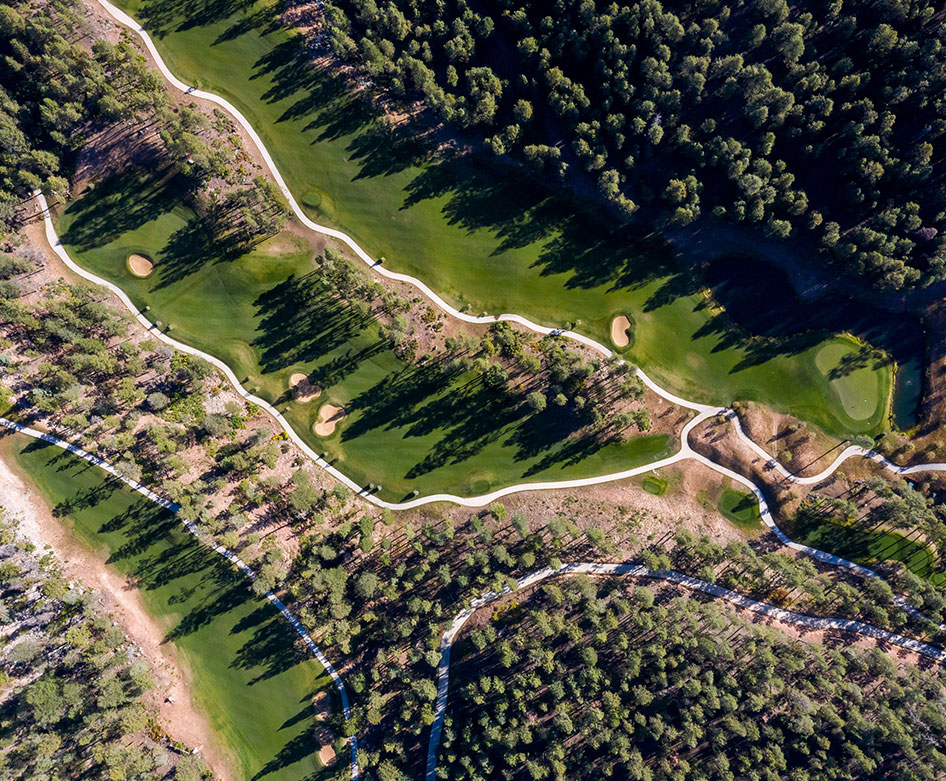

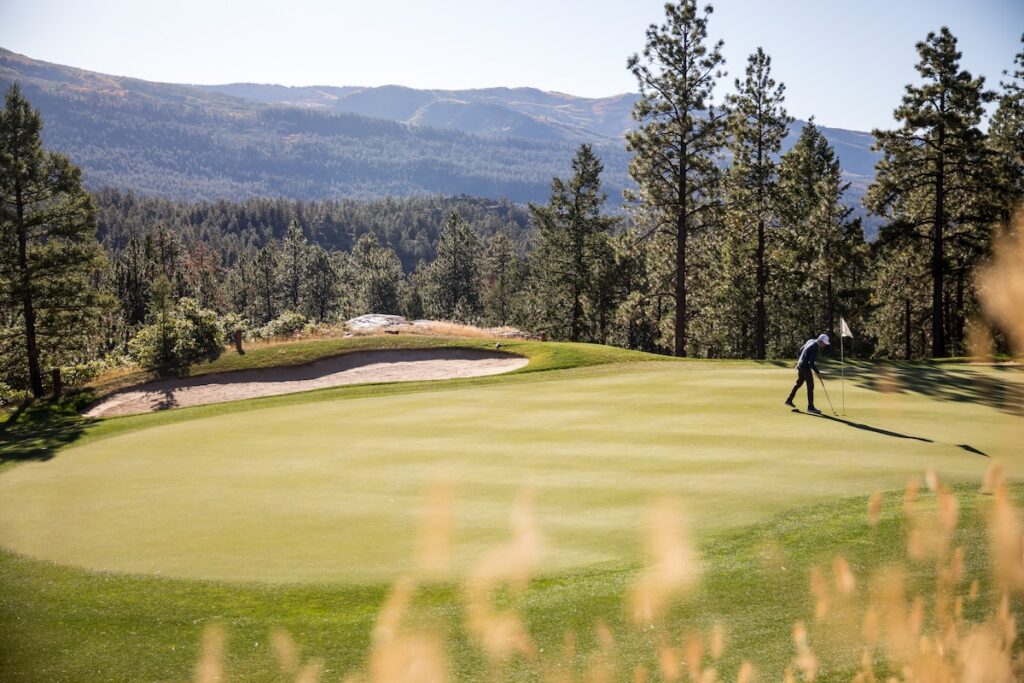
At Glacier Club, a 611-yard par 5 can be reachable in two, while a 287-yard par 4 may call for an iron off the tee. Set in the San Juan Mountains near Durango, Colorado, the club’s Mountain and Valley Courses offer 36 holes of championship golf across two very different landscapes. Dramatic elevation changes and granite outcroppings influence play on the Mountain Course, while tree-lined doglegs and water hazards reward accuracy on the Valley Course.
How Do Glacier Club’s Mountain and Valley Courses Compare?
Both 18-hole courses play to par 71, but each rewards its own style of shotmaking.
The Mountain Course, designed by three-time U.S. Open champion Hale Irwin and architect Todd Schoeder, measures 7,035 yards from the black tees. Granite formations, steep elevation changes and carefully positioned hazards encourage golfers to consider multiple routes from tee to green.
The Valley Course, originally designed by Arthur Hills in 1976, measures 6,536 yards from the black tees. Tree-lined fairways, strategic bunkering, water hazards and undulating greens place a premium on accuracy and approach angles.
The Mountain Course: High-Altitude Golf in the San Juan Mountains
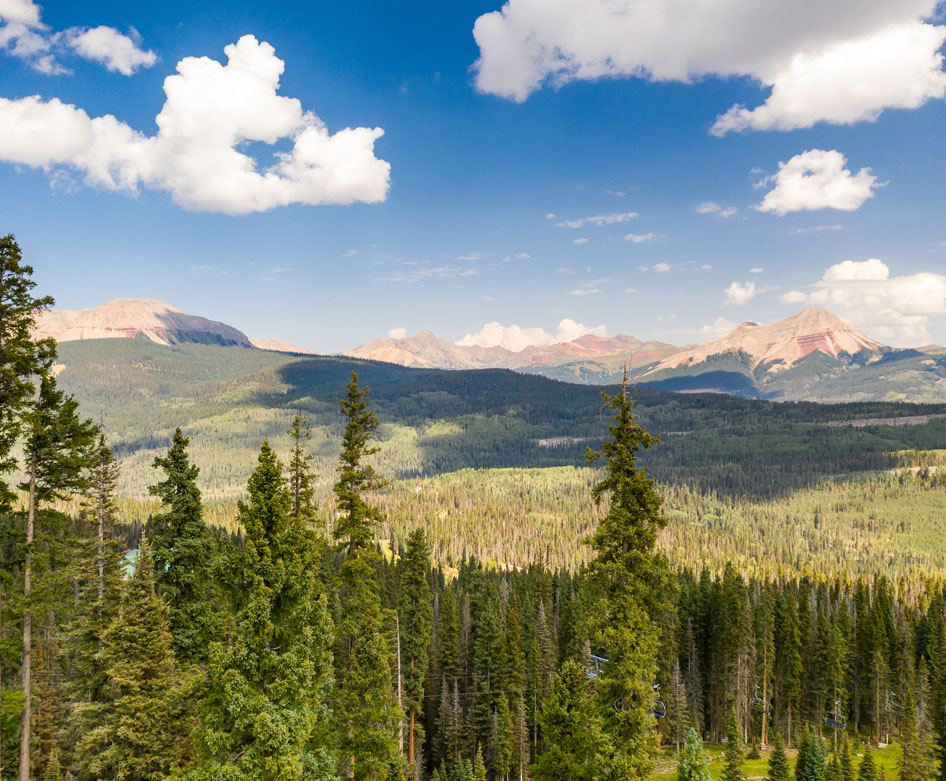
The Glacier Club Mountain Course winds through wooded slopes and natural granite formations, with sweeping views of the San Juan Mountains throughout the round. Averaging approximately 7,600 feet above sea level, the course climbs to 7,950 feet at the back tee of Hole 11, with 581 feet of elevation change across its 18 holes.
Irwin and Schoeder worked with the rugged terrain, using bunkers, rock formations and natural contours to create alternative playing routes. Every green was individually crafted on-site, and golfers will find opportunities to use the slopes and surrounding landforms to their advantage.
Signature Holes on the Mountain Course
Hole 5: Mark’s Meadow | Par 4 | 358 Yards
This short par 4 drops nearly 50 feet from tee to green, tempting longer hitters to take an aggressive line. A center fairway bunker complicates the decision, making a carefully placed tee shot and short approach an equally appealing strategy.
Hole 9: Grandma’s Curve | Par 4 | 469 Yards
The course’s No. 1 handicap hole begins a demanding four-hole stretch known as Horseshoe Corner. Its dogleg-left routing favors a tee shot over the rock outcropping on the right rather than through the more obvious opening, rewarding golfers familiar with the course’s angles.
Hole 10: Horseshoe | Par 3 | 183 Yards
Inspired by the fifth hole at Ireland’s Lahinch Golf Club, Horseshoe features a partially blind redan-style green nestled between a 30-foot granite ledge and a 100-foot drop-off. The contours allow golfers to play a low, running approach toward the putting surface, introducing a touch of traditional links-style strategy to the mountain setting.
Hole 15: Gambler | Par 4 | 473 Yards
A drop of over 100 feet from tee to green makes this long par 4 play considerably shorter than its measured distance. A large pond protects the left and back of the green, demanding a well-judged approach after the downhill drive. It’s also Hale Irwin’s favorite hole on the course.
Hole 18: Showdown | Par 5 | 611 Yards
The Mountain Course finishes with a memorable risk-reward opportunity. Despite its 611-yard length, a nearly 100-foot descent and a natural speed slot along the right side of the fairway give powerful players a chance to reach the green in two. The ideal tee shot catches the downhill contour, setting up an aggressive second shot.
The Valley Course: Arthur Hills Design and Strategic Shotmaking
Originally designed by Arthur Hills in 1976, the Glacier Club Valley Course has since been modernized with updated bunkering, hazards and additional strategic playing options. Its fairways wind through the Animas Valley beneath the Hermosa Cliffs, with ponderosa pines, Gambel oaks and mountain lakes influencing play throughout the round.
While shorter than the Mountain Course, the Valley asks golfers to think carefully about positioning. Doglegs and water hazards influence tee-shot strategy, while fast, contoured greens reward precise approaches and a confident short game.
Signature Holes on the Valley Course
Hole 1: Mesa Verde | Par 4 | 419 Yards
The opening hole introduces the importance of accuracy with a narrow, tree-lined plateau fairway. From the landing area, the approach plays to a green approximately 60 feet below, requiring careful distance control.
Hole 6: Needles | Par 3 | 170 Yards
Among the course’s toughest par 3s, Needles plays approximately 30 feet uphill to a small, severely sloping green. Two deep bunkers sit below the putting surface, making club selection and putting touch especially important.
Hole 7: Cliff Hanger | Par 4 | 437 Yards
Rated the Valley Course’s No. 1 handicap hole, Cliff Hanger is a demanding dogleg left with a severe drop-off along the left side and fairway bunkers to the right. The green sits roughly 40 feet below the fairway, guarded by a lake on the left and bunkers on the right. A controlled tee shot often provides the best opportunity for a manageable approach.
Hole 11: Gamble | Par 4 | 287 Yards
At just 287 yards, this potentially drivable par 4 presents a tempting opportunity. Longer hitters can challenge the green from the tee, although an iron followed by a wedge may offer a better chance at birdie. A diagonal shelf running through the fast putting surface adds another consideration for the approach.
Hole 18: Marmot Run | Par 5 | 492 Yards
The finishing hole rewards an aggressive drive that challenges the lake along the right side of the fairway. Golfers positioned well off the tee can consider reaching the elevated, two-tiered green in two, although deep bunkers, a narrow approach and surrounding trees call for careful execution.
How Does High Altitude Affect Golf at Glacier Club?
Playing golf at elevation requires a few adjustments, especially on courses with substantial changes in terrain.
The Mountain Course averages approximately 7,600 feet above sea level, where thinner air allows golf balls to travel farther than they would at sea level. At this elevation, shots can travel approximately 8% to 15% farther, depending on ball flight and playing conditions.
Accounting for elevation changes is equally important. Downhill holes like Gambler can play significantly shorter than the scorecard suggests, while uphill approaches may require an extra club. Mountain winds and changing temperatures further influence distance control, particularly when approaching elevated or well-protected greens.
For golfers accustomed to playing at lower elevations, time on the practice range can help establish reliable carry distances before heading out.
What Does Golf Membership at Glacier Club Include?
For golfers researching private golf courses in Southwest Colorado, Glacier offers four membership tiers with varying levels of course access.
Platinum membership provides unlimited golf on both the Mountain and Valley Courses, while Gold membership includes a seasonal allotment of rounds across both courses. Silver membership offers unlimited play on the Valley Course, and Bronze membership provides a select number of Valley Course rounds each season.
Both courses have dedicated practice facilities with driving ranges, putting greens and chipping areas, complemented by the club’s golf instruction and professional services. Qualifying membership levels also provide access to a golfer’s gym and golf simulator lounge, along with dining and recreational amenities across Glacier’s two clubhouses.
Golfers can explore the complete Mountain and Valley Course scorecards and hole-by-hole video highlights for a closer look at each layout.
Glacier Club Golf: Frequently Asked Questions
Is Glacier Club a private golf club?
Yes. Glacier Club is a private mountain and golf community near Durango, Colorado, with 36 championship holes across the Mountain and Valley Courses. Course access varies by membership level, and prospective members can contact the club to discuss membership and visiting opportunities.
Which Glacier Club course is more challenging?
Both courses present championship-level challenges in different ways. The Mountain Course tests elevation management, distance control and risk-reward decision-making, while the Valley Course places greater emphasis on accuracy, approach angles and navigating tree-lined fairways and water hazards.
Does Glacier Club offer multiple tee options?
Yes. Both courses feature black, gold, white, silver and green tee options, allowing golfers to choose a distance suited to their game.
Experience Golf at Glacier Club
From the dramatic elevation changes and risk-reward opportunities of the Mountain Course to the precision demanded by the Valley Course, Glacier Club offers 36 holes of championship golf beneath the San Juan Mountains. For serious golfers, the variety of terrain, strategic challenges and carefully designed holes make each course rewarding to play time and again.
Explore Glacier Club’s membership options and connect with the team to learn more about golf at Glacier.